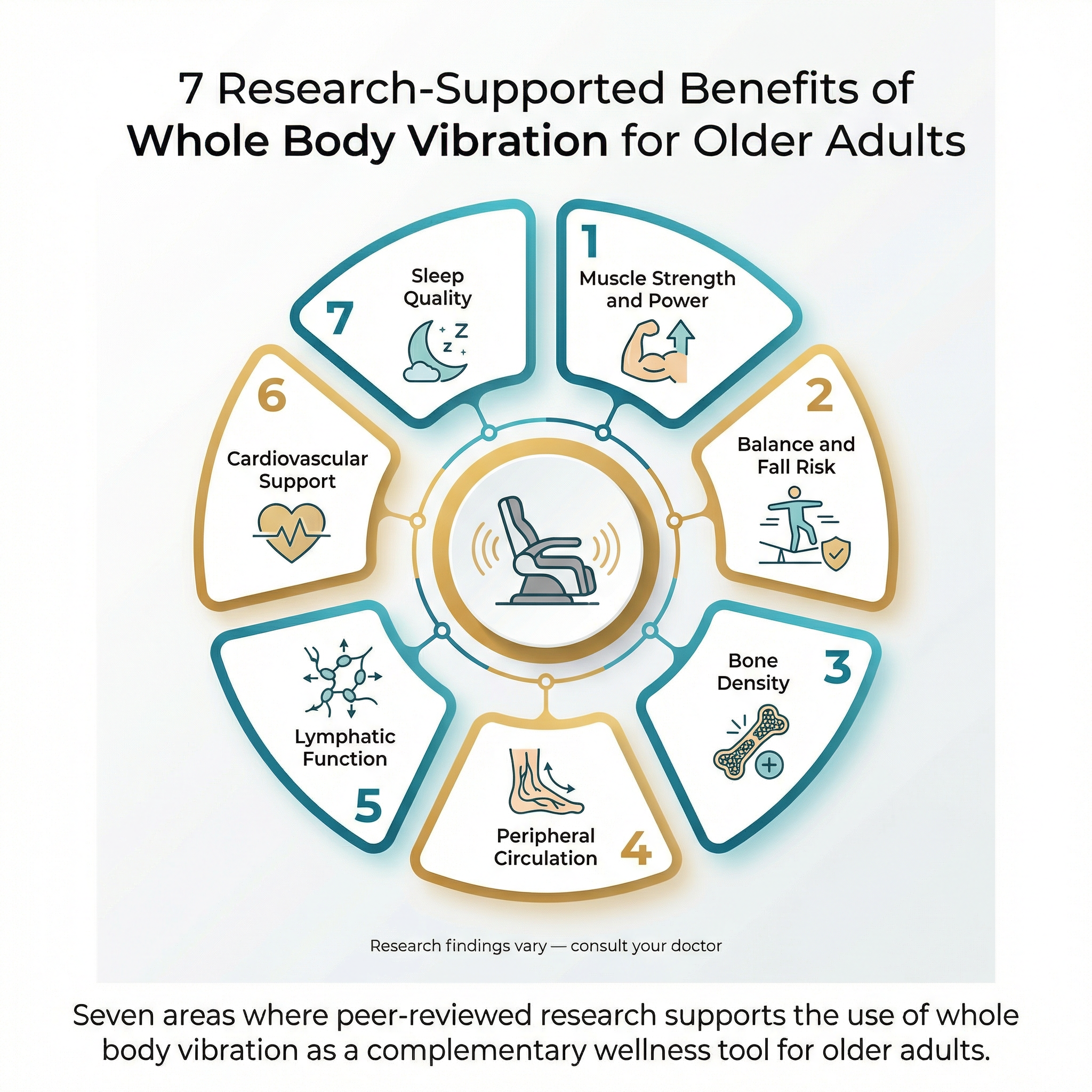
Whole Body Vibration Benefits for Elderly Adults: What the Research Says
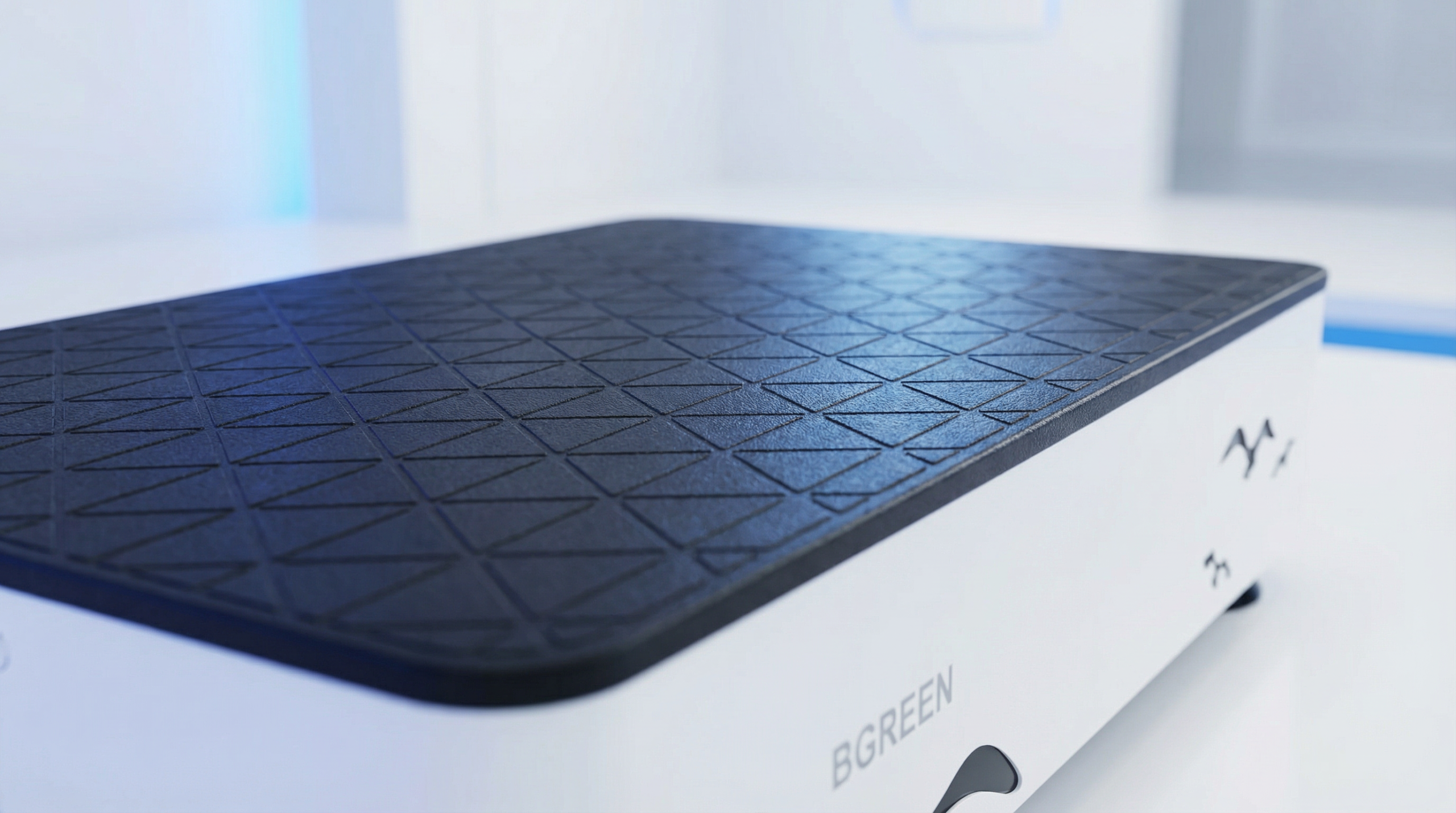
Whole body vibration (WBV) has been studied in clinical and research settings for over two decades. The technology has been used in sports performance, rehabilitation, and healthy ageing contexts — and the body of peer-reviewed research is substantial enough that it is now routinely discussed in physiotherapy and geriatric medicine literature.
This article summarises what the research says about the key benefits of whole body vibration for older adults — written in plain language, with appropriate caveats. At Vibrahealth, we are committed to being accurate and honest about what the science supports, and where it does not yet reach.
Important: Our BGREEN whole body vibration products are general wellness equipment. They are not medical devices and are not intended to diagnose, treat, cure, or prevent any condition. What follows is a summary of published research findings, not a clinical recommendation. Please consult your doctor or physiotherapist for personalised advice.
1. Muscle Strength and Power
One of the most consistently studied benefits of WBV is its effect on muscle strength — particularly in older adult populations.
When the body is exposed to whole body vertical vibration (WBVV), the vibrations trigger a neurological response called the tonic vibration reflex. This causes rapid, involuntary muscle contractions throughout the body — particularly in the postural muscles of the legs, hips, and core. These contractions are similar in character to those produced during voluntary resistance exercise, but require no conscious effort from the person on the platform.
What research suggests:
- A systematic review published in Archives of Physical Medicine and Rehabilitation found that WBV training was associated with significant improvements in lower limb muscle strength in older adults compared to controls
- Studies in elderly populations have found improvements in leg press strength and knee extensor strength following 8–12 week WBV programmes
- Research on post-menopausal women found WBV produced similar or greater strength improvements than conventional resistance training at equivalent volumes
For older adults who cannot safely perform conventional resistance exercise due to joint pain, fall risk, or physical limitations, this is a meaningful finding.
2. Balance and Fall Risk Reduction
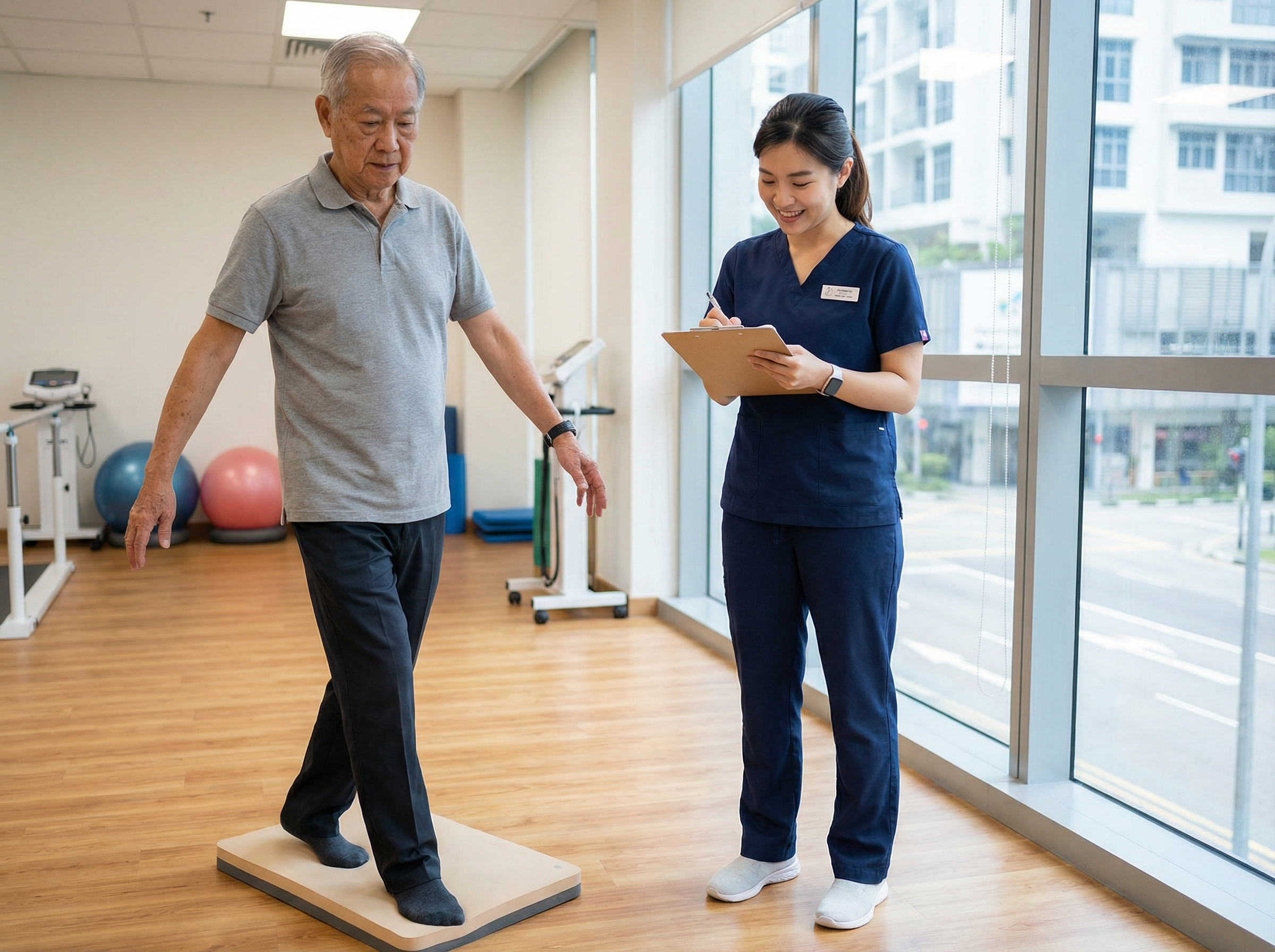
Balance impairment is one of the most significant risk factors for falls in older adults — and falls are the leading cause of injury-related hospitalisation in Singaporeans aged 65 and above.
WBV appears to improve balance through two mechanisms: strengthening the muscles involved in postural stability, and improving proprioception — the body's internal sense of where its limbs are in space, which deteriorates with age.
What research suggests:
- Multiple randomised controlled trials have found that older adults undergoing WBV programmes show significant improvements on standardised balance assessment tools (including the Berg Balance Scale and Timed Up and Go test) compared to control groups
- A meta-analysis of 13 studies on WBV and fall prevention in older adults found a significant reduction in fall rate among participants receiving WBV intervention
- Research in nursing home residents — a population with high fall risk — found meaningful improvements in balance and mobility following WBV programmes
3. Bone Density
Osteoporosis — characterised by low bone density and increased fracture risk — affects a significant proportion of older Singaporeans, particularly post-menopausal women. Mechanical loading of bone is one of the key stimuli for bone formation, and WBV provides a form of mechanical stimulation that may support bone health.
What research suggests:
- Studies have found that WBV is associated with increases in bone mineral density at the lumbar spine and femoral neck in post-menopausal women
- Research suggests WBV stimulates osteoblast activity (bone-forming cells) through mechanical signalling pathways
- Results across studies are variable, and bone density outcomes appear to depend significantly on vibration parameters (frequency, amplitude) and duration of intervention
This is an area where the evidence is promising but not definitive — more research is needed before strong conclusions can be drawn.
4. Peripheral Circulation
Poor peripheral circulation — experienced as cold hands and feet, swollen ankles, heavy legs, or slow wound healing — is a common concern in older adults, particularly those with diabetes, cardiovascular conditions, or extended sedentary periods.
The rhythmic muscle contractions produced by WBV act as a pump for peripheral blood and lymphatic fluid, supporting circulatory function in the limbs.
What research suggests:
- Studies using laser Doppler flowmetry (a technique for measuring blood flow in small blood vessels) have found significant increases in peripheral blood flow during and immediately following WBV sessions
- Research on individuals with type 2 diabetes has found WBV associated with improvements in skin blood flow and microvascular function
- Studies on bed-ridden or immobile individuals have explored WBV as a potential intervention for preventing deep vein thrombosis (DVT) through circulation support — though this application requires clinical guidance
For the many older Singaporeans who spend significant time seated — whether due to lifestyle, health conditions, or mobility limitations — improved peripheral circulation is one of the most immediately noticeable effects of a WBV session. Many of our Wellness Lounge visitors describe feeling warmer and lighter in their legs within a single 15-minute session.
5. Lymphatic Function and Inflammation Reduction
The lymphatic system — responsible for immune function, fluid balance, and waste removal from tissues — has no pump of its own. It relies on muscle contraction and movement to circulate lymph through the body. Extended inactivity causes lymphatic stagnation, which contributes to swelling, immune dysfunction, and chronic low-grade inflammation.
What research suggests:
- WBV has been studied as a complementary approach for lymphoedema management, with some studies showing reductions in limb volume and improvements in lymphatic drainage
- Research on inflammatory markers suggests WBV may be associated with reductions in circulating inflammatory cytokines following regular sessions
- Chronic low-grade inflammation is increasingly recognised as a driver of age-related disease; interventions that support its reduction are of growing research interest
6. Cardiovascular Function
Whole Body Periodic Acceleration (WBPA) — one of the two technologies used in the BGREEN product range — involves a gentle horizontal rocking motion that produces cardiovascular effects distinct from vertical vibration. Research on WBPA has focused particularly on its effects on nitric oxide production, a key regulator of blood vessel function.
What research suggests:
- Studies on WBPA have found it associated with increased nitric oxide release from vascular endothelial cells, which supports blood vessel dilation and cardiovascular function
- Research on WBPA in older adult populations has found associations with reductions in resting heart rate and blood pressure in some studies
- WBPA has been explored in the context of cardiac rehabilitation — though for this application, clinical supervision is essential
7. Sleep Quality and Mood
Several studies have examined the effects of regular WBV on sleep quality and psychological wellbeing in older adults — outcomes that are particularly relevant given the prevalence of sleep disruption and low mood in this population.
What research suggests:
- Studies on older adults have found self-reported improvements in sleep quality following WBV programmes
- Research has found WBV associated with reductions in self-reported anxiety and depressive symptoms in elderly populations, though mechanisms are not fully established
- The parasympathetic (rest-and-digest) nervous system activation associated with vibration at certain frequencies may contribute to relaxation responses
How Vibrahealth's BGREEN Products Deliver These Benefits
Vibrahealth offers the full BGREEN product range — Singapore's exclusive access to a Taiwanese brand with over 20 years of product development and an international presence across Asia, Europe, and the Middle East.
The range includes:
- uChair — a seated WBVV platform designed for home use, ideal for older adults who prefer or require a seated position
- uSofa — a vibration sofa combining WBVV technology with the comfort and accessibility of everyday lounge furniture
- uBed — a WBPA vibration bed providing periodic acceleration in a lying position, used for cardiovascular and circulatory support
All products are calibrated for safe use in older adult populations. Our Wellness Lounge team adjusts settings for each visitor based on their individual situation and comfort level.
Visit our Products page or our Science page for more detail.
Frequently Asked Questions
What are the proven benefits of whole body vibration?
Peer-reviewed research supports associations between WBV and improvements in muscle strength, balance, bone density, peripheral circulation, and fall risk in older adult populations. Results vary by study design, vibration parameters, and individual characteristics. WBV is best understood as a complementary wellness tool, not a replacement for conventional medical or physiotherapy interventions.
How long does it take to see benefits from whole body vibration?
Most research protocols run 8–12 weeks, with sessions 2–3 times per week. Observable benefits — improved circulation, reduced morning stiffness — are often reported within the first few sessions. More significant structural changes (muscle strength, balance scores) emerge over weeks of consistent use.
Is whole body vibration safe for elderly people?
For most older adults, WBV at appropriate settings is well-tolerated and safe. Specific contraindications include recent fractures, certain implanted devices (pacemakers, cochlear implants, joint implants in some cases), pregnancy, and acute inflammatory conditions. Always consult a doctor before starting if you have significant health concerns.
What is the difference between WBVV and WBPA?
WBVV (Whole Body Vertical Vibration) delivers vertical oscillations that trigger muscle contractions throughout the body — primarily targeting strength, balance, and circulation. WBPA (Whole Body Periodic Acceleration) involves horizontal rocking motion with a focus on cardiovascular and vascular effects including nitric oxide production. BGREEN products use both technologies across their range. See our detailed WBVV vs WBPA explainer for more.
Experience whole body vibration at our Wellness Lounge at The Adelphi, Singapore. Your first session is complimentary. WhatsApp us or book online.